
کسی وقت، تمام پیداواری نظام ایک ہی دیوار سے ٹکراتے ہیں۔ یہ صرف اس صورت میں کام کرتا ہے جب آپ اسے چیک کرنا یاد رکھیں۔ تصور آپ پر نہیں چیختا ہے، آسن آپ کی پیروی نہیں کرتا ہے، اور کیلنڈر کی یاد دہانیوں کو بند کرنا آسان ہے۔
لیکن کیا ہوگا اگر آپ کے تمام کام آپ کے ڈیسک ٹاپ پر ہی ظاہر ہوں؟ پھر وہ ہمیشہ آپ کے ذہن میں نظر آئیں گے۔ اس لیے میں نے Claude کو زیر التواء کام کی بنیاد پر اپنے وال پیپرز کو منظم اور اپ ڈیٹ کرنے دیا، اور میری آخری تاریخ کے اندھے دھبے بنیادی طور پر ختم ہو گئے۔
کلاڈ میرا وال پیپر کیسے بدلتا ہے؟
آپ نہیں جانتے تھے کہ کلاڈ ایسا کر سکتا ہے، کیا آپ نے؟
جب میں اس ورک فلو کے بارے میں بات کرتا ہوں تو وہ چیز جو لوگوں کو سب سے زیادہ حیران کرتی ہے وہ یہ ہے کہ Claude میرا وال پیپر تبدیل کر سکتا ہے۔ اب، یہ "اپنے کمپیوٹر کا استعمال کریں” کا منظر نامہ نہیں ہے جہاں کلاڈ ماؤس کو حرکت دیتا ہے، تصویر پر دائیں کلک کرتا ہے، اور "ڈیسک ٹاپ پس منظر کے طور پر سیٹ کریں” کو منتخب کرتا ہے۔ یہ اس سے کہیں زیادہ خوبصورت ہے۔
ونڈوز میں درج ذیل بلٹ ان سسٹم APIs ہیں: سسٹم پیرامیٹر کی معلومات یہ کسی بھی پروگرام کو ڈیسک ٹاپ وال پیپر سیٹ کرنے کے لیے تصویری فائل کی طرف اشارہ کرنے کی اجازت دیتا ہے۔ لہذا کلاڈ کو صرف ایک چھوٹا اسکرپٹ لکھنا اور چلانے کی ضرورت ہے جو اس API کو امیج پاتھ کے ساتھ کال کرتی ہے۔ پھر ونڈوز اسے فوری طور پر آپ کے نئے وال پیپر کے طور پر لاگو کرے گی۔ کسی تھرڈ پارٹی ایپس یا خصوصی سافٹ ویئر کی ضرورت نہیں ہے۔
ونڈوز 11 میں، اب آپ ہر روز ایک نیا ڈیسک ٹاپ وال پیپر ڈاؤن لوڈ کر سکتے ہیں۔
آپ کی ونڈوز لاک اسکرین کے لیے آٹو سوئچنگ وال پیپر اب آپ کے ڈیسک ٹاپ پر دستیاب ہے۔
کلاڈ میرے وال پیپر میں کام کیسے شامل کرتا ہے؟
ہاں، کلاڈ تصاویر میں بھی ترمیم کر سکتا ہے۔

اب جب کہ آپ سمجھ گئے ہیں کہ کلاڈ آپ کے ڈیسک ٹاپ وال پیپر کو کیسے اپ ڈیٹ کرتا ہے، اگلا سوال یہ ہے کہ: آپ کام کیسے شامل کرتے ہیں؟ پہلے سے طے شدہ طور پر، Claude ChatGPT کی طرح تصاویر نہیں بنا سکتا اور نہ ہی اس میں ترمیم کر سکتا ہے، اور اس میں بلٹ ان امیج ماڈل شامل نہیں ہے۔ تو میں اپنی ٹاسک لسٹ کے ساتھ امیج کو کیسے اپ ڈیٹ کروں؟
جواب کوڈ ہے۔
Pillow نامی ایک Python لائبریری ہے جو آپ کو پروگرام کے لحاظ سے تصاویر میں ہیرا پھیری کرنے کی اجازت دیتی ہے۔ آپ ایک تصویر کھول سکتے ہیں، اس کے اوپر متن کھینچ سکتے ہیں، شکلیں شامل کر سکتے ہیں، شفاف اوورلیز کی تہہ کر سکتے ہیں، اور نتیجہ کو نئی فائل کے طور پر محفوظ کر سکتے ہیں۔
Claude ایک Python اسکرپٹ لکھتا اور چلاتا ہے جو پہلے سے طے شدہ وال پیپر کا استعمال کرتا ہے، بیچ میں ایک نیم شفاف کارڈ کھینچتا ہے، اور اس کے اندر کام کا نام، مقررہ تاریخ، اور مختصر اقتباس رکھتا ہے۔ ہر چیز کو ایک فلیٹ JPEG میں کمپوز کیا گیا ہے لہذا آپ اسے براہ راست ونڈوز میں وال پیپر کے طور پر استعمال کر سکتے ہیں۔
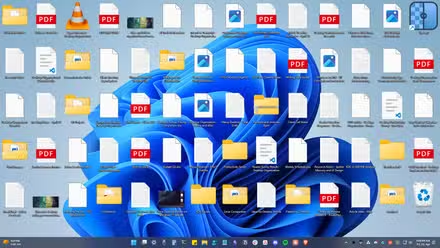
میں اپنے میسی ونڈوز ڈیسک ٹاپ سے کیوں محبت کرتا ہوں۔
اس کی ایک اور مثال کہ کیوں ناسیر بننا بہتر ہے!
کلاڈ میرے کام کے بارے میں کیسے جانتا ہے؟
یہ حصہ دراصل سب سے آسان حصہ ہے۔

اس ورک فلو کے سب سے بنیادی ورژن میں، آپ کلاڈ کو چیٹ کے ذریعے اپنے کام کے بارے میں بتا سکتے ہیں، اور وال پیپر اسی کے مطابق اپ ڈیٹ ہو جائے گا۔ لیکن اس عمل کو خودکار کیا جا سکتا ہے تاکہ اسے اور بھی ہینڈز فری بنایا جا سکے۔
سب سے آسان طریقہ یہ ہے کہ کلاڈ کو براہ راست اس سے جوڑیں جہاں آپ اپنے کام کا انتظام کرتے ہیں۔ میرے لیے یہ تصور ہے۔ کلاڈ کے پاس نوشن کے لیے مقامی کنیکٹر ہے۔ ایک بار منسلک ہونے کے بعد، آپ ٹاسک ڈیٹا بیس کو حقیقی وقت میں براہ راست پڑھ سکتے ہیں، بشمول ٹاسک کے نام، مقررہ تاریخیں، اور حیثیت۔
اگر آپ اس کے بجائے آسنا اور کلک اپ استعمال کرتے ہیں تو کلاڈ مقامی کنیکٹرز کو بھی سپورٹ کرتا ہے۔ اگر ٹول ڈیفالٹ کنیکٹر مارکیٹ پلیس میں نہیں ہے، تو آپ اپنی مرضی کے مطابق MCP کنیکٹر سیٹ اپ کرنے کے لیے اس کا API استعمال کر سکتے ہیں۔ اس کے لیے تھوڑا سا مزید سیٹ اپ درکار ہے، لیکن آپ کلاڈ سے کہہ سکتے ہیں کہ وہ اپنے نفاذ کو وائب کریں۔
ایک بار انضمام مکمل ہو جانے کے بعد، آپ کو کچھ یاد رکھنے یا کلاڈ سے دستی طور پر بات کرنے کی ضرورت نہیں ہے۔ آپ ایپ سے استفسار کر سکتے ہیں، اس کے اعمال پڑھ سکتے ہیں، اور خود بخود وال پیپر تیار کر سکتے ہیں۔
کلاڈ صرف پروگرامرز کے لیے نہیں ہے۔ کلاؤڈ کو اپنی روزمرہ کی زندگی میں استعمال کرنے کے 7 طریقے یہ ہیں:
وائب کوڈنگ آپ سب کچھ نہیں کر سکتے۔
اس سسٹم کو آٹو پائلٹ پر کیسے چلایا جائے۔
اگر یہ ہینڈز فری کام نہیں کرتا ہے تو یہ میرے لیے بیکار ہے۔

اب تک آپ کو اس بات کا واضح اندازہ ہو جانا چاہیے کہ یہ عمل کیسے کام کرتا ہے۔ لیکن میں چاہتا ہوں کہ یہ عمل مکمل طور پر خودکار ہو۔ میں صبح اٹھنا چاہتا ہوں، اپنا کمپیوٹر کھولنا چاہتا ہوں، اور اپنے ڈیسک ٹاپ کو میرے کام اور دن کے لیے اپنے مناسب موڈ کے ساتھ اپ ڈیٹ ہوتا دیکھنا چاہتا ہوں۔
ایسا کرنے کے لیے، میں نے تین ٹائرڈ سسٹم بنایا۔
یہ ایک طے شدہ کام کے ساتھ شروع ہوتا ہے جو ہر 6 گھنٹے بعد کلاڈ کو کال کرتا ہے۔ کلاڈ آپ کے موجودہ کاموں کو تصور سے لیتا ہے اور دن کے لیے آپ کے موڈ کا تعین کرتا ہے: پرسکون، حوصلہ افزائی، فوری۔ پھر میں مخصوص فولڈر سے اس موڈ سے مماثل تصاویر منتخب کرتا ہوں، اپنے کام کو ان میں کھینچتا ہوں، اور انہیں مقامی طور پر محفوظ کرتا ہوں۔
شیڈول کردہ کام صرف اس وقت کام کرتے ہیں جب Claude ڈیسک ٹاپ ایپ کھلی ہو یا پس منظر میں چل رہی ہو۔
دوسری پرت پاور شیل اسکرپٹ ہے جو وال پیپر فائل کی نگرانی کے لیے ونڈوز کا بلٹ ان فائل سسٹم واچر استعمال کرتی ہے۔ جیسے ہی کلاڈ ایک نئی تصویر بناتا ہے، اسکرپٹ ٹرگر کرتا ہے اور اسے لاگو کرنے کے لیے ونڈوز API کو کال کرتا ہے۔ اپ ڈیٹس تقریباً فوری ہیں۔
تیسری پرت ونڈوز ٹاسک شیڈیولر ہے، جو ہر بار جب آپ لاگ ان کرتے ہیں تو خود بخود واچر اسکرپٹ کو شروع کر دیتی ہے۔ یہ یقینی بنائے گا کہ دوبارہ شروع ہونے کے بعد سب کچھ خود بخود دوبارہ شروع ہوجاتا ہے۔
نتیجہ ایک ڈیسک ٹاپ ہے جو میری آخری تاریخ کی بنیاد پر ہر چھ گھنٹے بعد اپ ڈیٹ ہوتا ہے۔ جب میں ٹریک پر آتا ہوں تو مجھے ایک پرسکون وال پیپر نظر آتا ہے۔ اگر کام جلد ہی ہونا ہے، تو لہجہ زیادہ حوصلہ افزا کی طرف بدل جاتا ہے۔ اور اگر کچھ زائد المیعاد ہے تو، جب بھی میں کھڑکی کو چھوٹا کروں گا تو ایک سرخ فوری کارڈ مجھے گھور رہا ہوگا۔
اس نظام کو خود ہی آزمائیں۔
سب سے پہلی چیز جس کی آپ کو ضرورت ہے وہ ہے Claude Cowork، Claude ڈیسک ٹاپ ایپ میں دستیاب ہے۔ یہ آٹومیشن ویب ایپس میں کام نہیں کرتی ہے۔ ڈیسک ٹاپ ایپ ونڈوز اور میک او ایس کے لیے دستیاب ہے۔
اگلا، آپ کو اپنے تصور اکاؤنٹ یا کاموں کا نظم کرنے کے لیے ایک ایپ کی ضرورت ہوگی۔
ایک بار سب کچھ ترتیب دینے کے بعد، ذیل میں پرامپٹ کو ایک نئے Claude Cowork سیشن میں چسپاں کریں۔ کلاڈ آپ کو بتائے گا کہ سسٹم کیسے کام کرتا ہے اور پھر آپ سے چند آسان سوالات پوچھے گا، بشمول آپ کی اسکرین ریزولوشن، چیزیں کہاں چلتی ہیں، آیا آپ اپنا وال پیپر استعمال کرنا چاہتے ہیں یا اسے Claude سے سورس کرنا چاہتے ہیں، اور آپ کا وال پیپر کتنی بار ریفریش ہوگا۔
یہاں آپ پورے سسٹم کو ایک سیشن میں بناتے ہیں، بشمول ایک Python اسکرپٹ، PowerShell واچر، اور ٹاسک شیڈیولر۔
اشارہ ہے:
# Dynamic Wallpaper Setup Prompt
---

You are setting up a **Dynamic Desktop Wallpaper System** for the user. This system automatically updates their Windows desktop wallpaper every few hours based on their real tasks from Notion — showing what's due, how urgent things are, and a contextual motivational quote. The wallpaper changes mood (calm / motivated / urgent) based on their task state.

Before doing anything, introduce yourself and explain the system clearly:

---

**What this system does:**
- Reads the user's tasks from Notion automatically
- Determines a "mood" based on urgency (calm = all good, motivated = things due soon, urgent = overdue tasks)
- Picks a matching wallpaper photo for that mood
- Composites a clean overlay card showing their tasks + a mood-matched quote
- Saves the result and applies it to their Windows desktop instantly
- Repeats automatically every few hours with no user action needed

**What it looks like:** A beautiful full-screen photo wallpaper with a centered dark card overlay showing tasks, due dates, and a short punchy quote — all styled to match the urgency of their day.

---

Then ask the user the following questions **before doing any work**. Wait for their answers before proceeding:

1. **Screen resolution** — What is your monitor resolution? (e.g. 1920x1080, 2560x1080 ultrawide, 2560x1440, 4K)
2. **Notion** — Do you have a Notion account and the Notion MCP connected to your Claude session? (If not, pause and help them set it up first)
3. **Task page** — Where are your tasks in Notion? (Share the page URL or name — Claude will help locate them)
4. **Wallpaper style** — Do you want to use pre-made wallpapers downloaded from GitHub, or do you have your own wallpapers you'd like to use?
5. **Moods** — The default setup uses three moods: calm, motivated, urgent. Are you happy with these or do you want to rename/adjust them?
6. **Refresh frequency** — How often should the wallpaper auto-update? (Every 2 hours / 4 hours / 6 hours — default is 6)

---

Once you have their answers, proceed with setup in this exact order. **Explain each step as you go** — what you're doing and why — so the user understands the system they're building.

---

## STEP 1 — Create the Wallpaper folder

Create a `Wallpapers` folder in their chosen workspace directory. All files for this system live here.

---

## STEP 2 — Set up wallpaper images

**If the user has their own wallpapers:**
Ask them to copy their images into the Wallpapers folder. Then ask them to assign each image to a mood — calm, motivated, or urgent — ideally 2-3 images per mood for variety. Rename them to the naming convention: `calm_01.jpg`, `calm_02.jpg`, `motivated_01.jpg` etc. If they're unsure which mood to assign an image to, look at the image and suggest based on the visual tone (peaceful/serene = calm, energetic/dramatic = motivated, dark/intense = urgent).

**If the user wants pre-made wallpapers from GitHub:**
Download 9 images from the `dharmx/walls` GitHub repository — 3 per mood. Use git sparse/blobless clone to avoid downloading the entire repo:

```bash
git clone --filter=blob:none --sparse https://github.com/dharmx/walls.git /tmp/walls_repo
cd /tmp/walls_repo
git sparse-checkout set .
```

Then use `git cat-file blob ` to download individual files by their blob SHA. Choose:
- **calm** — peaceful nature scenes (lakes, waterfalls, mountains, icebergs)
- **motivated** — dramatic landscapes (canyons, city at night, aerial views)
- **urgent** — dark/intense imagery (fires, dark alleys, dramatic skies)

Save as: `calm_01.jpg`, `calm_02.jpg`, `calm_03.jpg`, `motivated_01.jpg` ... `urgent_03.jpg`

**In both cases:** resize/crop images to match the user's screen resolution before saving. The engine expects all wallpapers to match the target resolution exactly.

---

## STEP 3 — Create wallpaper_metadata.json

Create this file in the Wallpapers folder mapping each wallpaper to its mood and text color:

```json
{
  "wallpapers": [
    {"file": "calm_01.jpg", "mood": "calm", "text_color": "#ffffff"},
    {"file": "calm_02.jpg", "mood": "calm", "text_color": "#ffffff"},
    {"file": "calm_03.jpg", "mood": "calm", "text_color": "#ffffff"},
    {"file": "motivated_01.jpg", "mood": "motivated", "text_color": "#ffffff"},
    {"file": "motivated_02.jpg", "mood": "motivated", "text_color": "#ffffff"},
    {"file": "motivated_03.jpg", "mood": "motivated", "text_color": "#ffffff"},
    {"file": "urgent_01.jpg", "mood": "urgent", "text_color": "#ffffff"},
    {"file": "urgent_02.jpg", "mood": "urgent", "text_color": "#ffffff"},
    {"file": "urgent_03.jpg", "mood": "urgent", "text_color": "#ffffff"}
  ]
}
```

---

## STEP 4 — Create quotes.json

Create a curated set of mood-matched quotes. These are used contextually — calm quotes are grounding, motivated quotes energize, urgent quotes push the user to act immediately.

```json
{
  "calm": [
    "One thing at a time. Done well.",
    "Clarity comes from action, not thought.",
    "Slow is smooth. Smooth is fast.",
    "Focus on what's in front of you.",
    "A calm mind gets more done.",
    "Do the work. Let the rest follow.",
    "Progress, not perfection.",
    "Start where you are. Use what you have.",
    "The secret is just to begin.",
    "Breathe. Then do the next right thing."
  ],
  "motivated": [
    "You've got this. Now prove it.",
    "Energy follows intention. Set yours now.",
    "Ship something today. Anything.",
    "Done beats perfect every single time.",
    "The gap between where you are and where you want to be is called work.",
    "Push through. Future you will thank you.",
    "Today's effort is tomorrow's result.",
    "Stop planning. Start executing.",
    "Your to-do list won't clear itself.",
    "Make today count. It won't come back."
  ],
  "urgent": [
    "You're behind. Stop reading this and move.",
    "There's no later. There's only now.",
    "The clock is running. Are you?",
    "Deadlines don't negotiate. You need to.",
    "Every hour you wait makes it harder.",
    "This is the moment. Not the next one.",
    "Urgency is not panic — it's clarity. Act.",
    "The work won't do itself. Get on it.",
    "Nothing clears a deadline like starting.",
    "You know what needs to happen. Do it."
  ]
}
```

---

## STEP 5 — Create wallpaper_engine.py

This is the rendering engine. It reads `wallpaper_config.json`, picks a wallpaper and quote for the mood, composites a centered rounded card with tasks and quote, and saves `current_wallpaper.jpg`.

Key design principles:
- **Centered dark card** with rounded corners (radius 18)
- **Full padding** on all sides (44px minimum) — nothing touches the border
- **Center-aligned text** throughout
- **Three distinct visual styles** per mood:
  - Calm: cool blue-dark panel, ice-blue accent bar, blue-tinted dividers
  - Motivated: warm brown-black panel, amber accent bar, warm border glow
  - Urgent: red-tinted dark panel, thick red accent, red border outline
- **Dynamic height** — card grows with number of tasks, always perfectly centered on screen
- **Two-pass layout** — compute exact height first, then draw, so bottom padding always matches top
- **Overdue tasks** highlighted in red/orange
- **Done tasks** shown in green

Use Python Pillow for image compositing. Install with: `pip install pillow`

The card layout (top to bottom):
1. Accent bar (mood color, 4-6px, rounded top)
2. Header text ("Today's Focus" / "Let's get it done" / "Action Required")
3. Thin divider line
4. Tasks (name bold + due date below each)
5. Thin divider line
6. Quote in quotation marks
7. "Updated HH:MM" timestamp

---

## STEP 6 — Create the Windows wallpaper watcher

Create two PowerShell scripts:

**watch_wallpaper.ps1** — A FileSystemWatcher that monitors `current_wallpaper.jpg` and instantly applies it to the Windows desktop whenever Claude updates it. Uses `SystemParametersInfo` Windows API. Runs silently in the background.

**setup_wallpaper_watcher.ps1** — Run once as Administrator. Registers `watch_wallpaper.ps1` as a Windows Task Scheduler task that starts at logon, so the watcher survives reboots.

After creating both scripts, instruct the user to:
1. Right-click `setup_wallpaper_watcher.ps1` → Run as Administrator
2. Confirm the task registered successfully with: `Get-ScheduledTask -TaskName "ClaudeWallpaperWatcher"`

---

## STEP 7 — Fetch Notion tasks and generate first wallpaper

Using the Notion MCP, fetch the user's tasks. For each task extract:
- Task name
- Due date (formatted as YYYY-MM-DD)
- Status (Done / In Progress / Not Started / etc.)
- Priority if available (High / Medium / Low)
- Whether it's overdue (due date is before today)

Determine mood:
- **urgent** — any task is overdue
- **motivated** — tasks due within 2 days
- **calm** — everything else

Write `wallpaper_config.json`:
```json
{
  "mood": "calm",
  "tasks": [
    {"name": "Task name", "due": "2026-05-05", "status": "Pending", "priority": "High", "overdue": false}
  ],
  "quote": "placeholder",
  "generated_at": "2026-05-02 15:30"
}
```

Then run: `python3 wallpaper_engine.py`

The wallpaper will be generated and — if the watcher is running — applied to the desktop immediately.

---

## STEP 8 — Verify everything works

Ask the user to confirm:
1. The wallpaper changed on their desktop
2. The card is centered, readable, and has proper padding
3. Their actual tasks appear correctly

If anything looks off, troubleshoot before moving on.

---

## STEP 9 — Explain ongoing usage

Tell the user:

**Manual refresh:** Just tell Claude "refresh my wallpaper" or "new wallpaper" at any time. Claude will fetch current Notion tasks and regenerate.

**Automatic refresh:** To set this up, create a Cowork scheduled task that runs every few hours, fetches Notion tasks, determines mood, and regenerates the wallpaper automatically — no user action needed.

**The watcher:** As long as the `ClaudeWallpaperWatcher` task is in Task Scheduler (set it up once, it runs at every logon), any wallpaper Claude generates will appear on the desktop within 1 second.

**Customising quotes:** Edit `quotes.json` directly to add your own quotes per mood.

**Customising wallpapers:** Drop new images into the Wallpapers folder and add entries to `wallpaper_metadata.json`.

---

## Important notes for Claude

- Always use `# -*- coding: utf-8 -*-` at the top of Python files. Avoid em dashes and special Unicode characters in Python/PowerShell scripts — they cause encoding errors.
- The Pillow library is required: `pip install pillow --break-system-packages` (Linux sandbox) or `pip install pillow` (Windows).
- When writing large Python files, write them via bash `cat >` heredoc rather than the Write tool to avoid file truncation issues.
- The wallpaper engine uses a two-pass layout system: simulate the card height first, then draw. This ensures the bottom padding always matches the top.
- Test all three moods visually before calling setup complete.
- If the user's Notion tasks have a different structure than expected, adapt the field mapping accordingly.