
What is KK Downing’s net worth?
KK Downing is a semi-retired English guitarist and songwriter who has a net worth of $4 million.
KK Downing is best known as a founding member of the pioneering heavy metal band "Judas Priest.” Throughout a career spanning more than five decades, Downing helped define the dual guitar attack that became a signature of both the band and the genre as a whole. With his aggressive, high-energy stage presence and crisp, melodic playing style, he played a central role in shaping albums such as "Sad Wings of Destiny,” "British Steel” and "Screaming for Vengeance,” recordings that cemented Judas Priest as one of heavy metal’s most influential acts. His association with fellow guitarist Glenn Tipton created a model emulated by countless metal bands that followed. After leaving Judas Priest in 2011 following decades of global touring and commercial success, Downing finally returned to the stage with his own project, KK’s Priest, reconnecting with the sound that made him a metal icon while asserting his independence from his former band.
Early life
Kenneth Downing was born on October 27, 1951 in West Bromwich, England. Raised in the industrial Midlands, he grew up in a working class environment that would later shape the determination and intensity of his music. Inspired by guitarists such as Jimi Hendrix, Eric Clapton and Peter Green, Downing began teaching himself to play in his teens. With no formal training, he developed a distinctive style that combined blues phrasing with speed and precision. In the early 1970s, he was playing in local bands and refining the sound that would soon reach international audiences.
Judas Founding Priest
In 1970, Downing co-founded Judas Priest, a band that would become one of the most important architects of heavy metal. The classic lineup solidified around vocalist Rob Halford, guitarist Glenn Tipton, bassist Ian Hill and a succession of drummers, most notably Dave Holland during the band’s commercial peak in the 1980s. Together, this core group forged a sound and image that would become synonymous with traditional heavy metal.
The group released their debut album, "Rocka Rolla,” in 1974, but it was the darker, more ambitious "Sad Wings of Destiny” in 1976 that marked a new direction for metal. In the late ’70s and early ’80s, albums like "Hell Bent for Leather,” "British Steel” and "Screaming for Vengeance” elevated the band to stadium-level success.
Downing’s guitar partnership with Glenn Tipton became a defining characteristic of Judas Priest’s sound. Instead of relegating one guitarist to rhythm and the other to lead, the pair traded solos and harmonized melodies, creating a high-octane, layered attack that influenced generations of bands. Anchored by Ian Hill’s steady bass lines and driven by Halford’s soaring operatic vocals, songs like "Breaking the Law,” "Living After Midnight” and "You’ve Got Another Thing Comin'” became staples of rock radio and live performances around the world.
Jo Hale/Getty Images
Commercial peak and musical evolution
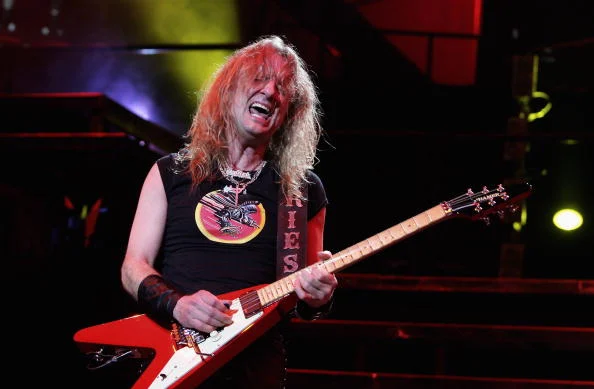
The 1980s marked Judas Priest’s commercial peak. "British Steel” simplified the band’s sound into concise, riff-based anthems, while "Screaming for Vengeance” brought the group into the American mainstream. Downing’s playing during this era combined speed, clarity and theatrical style. His use of flying V guitars and energetic stage movements made him both a visual and musical focal point.
As metal evolved in the late ’80s and early ’90s, Judas Priest experimented with heavier, more modern production on albums like "Painkiller.” The title track, in particular, showcased gripping guitar work that pushed technical boundaries. Even as musical trends changed, Downing remained committed to the band’s core identity.
Judas Priest departure
In 2011, Downing announced that he would not be participating in Judas Priest’s planned farewell tour, effectively ending his four-decade tenure with the band. The departure surprised fans and sparked speculation about internal disagreements. Downing later spoke publicly about the creative differences and frustrations that had developed over time. Despite his departure, his contributions to the band’s catalog remained instrumental to its legacy.
When Judas Priest was inducted into the Rock and Roll Hall of Fame in 2022, Downing joined the band onstage for select performances, offering symbolic recognition of his role in its history.
The KK priest and his later career
In 2020, Downing returned to actively recording and touring with KK’s Priest, a band formed alongside former Judas Priest vocalist Tim "Ripper” Owens. The project adopted a classic heavy metal sound reminiscent of Downing’s previous works. Albums like "Sermons of the Sinner” reaffirmed their commitment to the genre’s traditional intensity and melodic structure.
Outside of music, Downing has undertaken several business ventures over the years, including involvement in the development of golf resorts in England. While some businesses faced financial challenges, his reputation as a guitarist and songwriter remained intact.
Style and legacy
KK Downing’s influence on heavy metal is substantial. His sharp, articulate picking style and use of harmonized leads helped codify the twin guitar format that became a hallmark of metal bands throughout the 1980s and beyond. Artists across the genre cite Judas Priest’s catalog as formative, and Downing’s contributions are inseparable from that impact.
Beyond technique, his stage persona contributed to the leather-and-studs aesthetic that became synonymous with classic metal imagery. Combined with Rob Halford’s operatic voice and the band’s driving rhythms, Downing’s guitar work helped define a sound that bridged traditional hard rock and the emerging metal movement.
From industrial clubs in Birmingham to sold-out stadiums around the world, KK Downing’s career traces the rise of heavy metal itself. His riffs, solos, and harmonized tracks remain rooted in the genre’s DNA, securing his place among its founding figures.
All net worths are calculated using data extracted from public sources. When provided, we also incorporate private advice and feedback received from celebrities or their representatives. While we work diligently to ensure our figures are as accurate as possible, unless otherwise stated, they are estimates only. We appreciate all corrections and comments using the button below.