NVIDIA officially announced DLSS 5, a new version of its Deep Learning Super Sampling technology, at the GTC 2026 event. The next generation of AI-based graphics technology introduces neural rendering technology designed to create more realistic lighting and materials in games. This feature is scheduled to be released later this year.
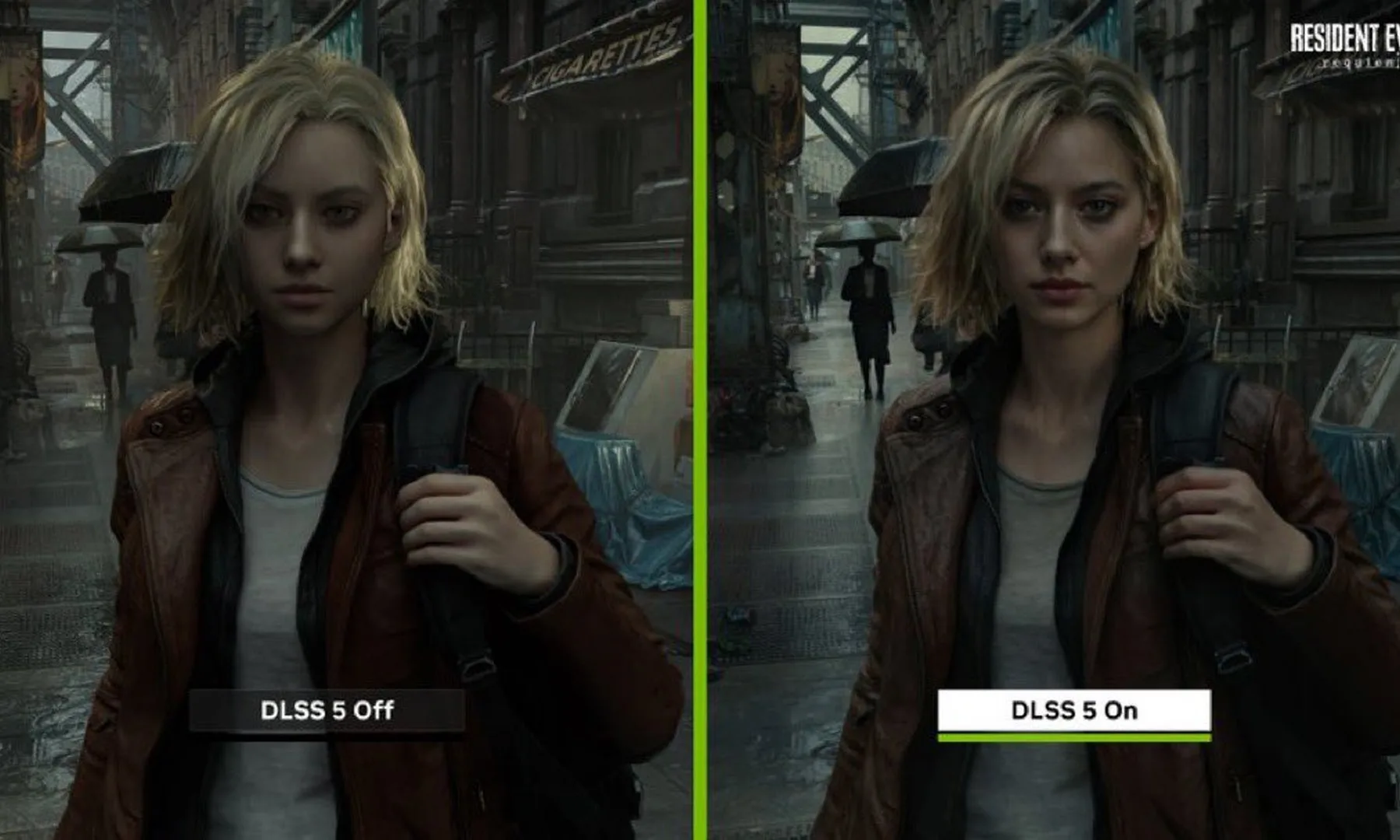
DLSS has been around for a long time, using AI to upscale low-resolution frames into high-resolution images to increase performance while maintaining visual quality, and DLSS 4.5 is the latest update. The new version takes that concept further by using neural networks to power part of the rendering pipeline itself, rather than simply reconstructing pixels.
What’s new in DLSS 5?
The biggest change in DLSS 5 is the introduction of neural rendering, a technology that helps AI generate elements of a scene, such as lighting, materials, and surface details, rather than relying solely on traditional rendering methods. This system can generate realistic lighting effects and more accurate material reflections, potentially improving the realism of ray-traced environments while maintaining high frame rates.
The technology builds on early DLSS features such as super-resolution, ray reconstruction, and frame generation, but is moving further toward AI-enabled graphics pipelines where neural networks play a larger role in how scenes are constructed.
What hardware supports DLSS 5?
NVIDIA has yet to officially confirm which GPU architectures will support DLSS 5, but the company has stated that the technology will launch with RTX 50 series GPUs later this year. According to Digital Foundry, NVIDIA described the lighting improvements shown in the demo as “transformative,” and the feature is expected to launch in fall 2026.

Interestingly, the demo setup used to showcase DLSS 5 didn’t run on a typical gaming PC. Digital Foundry reports that NVIDIA used two GeForce RTX 5090 GPUs. One was dedicated to running the game itself and the other handled the DLSS 5 neural rendering workload. This setting is currently necessary because the technology still needs significant optimization, especially in terms of performance efficiency and VRAM usage.
That said, NVIDIA has stated that DLSS 5 is ultimately designed to run on a single GPU, and is expected to do so when the technology launches publicly later this year.