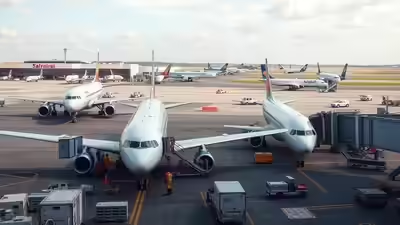
Air travelers, prepare for more expensive tickets! You may soon be charged higher amounts for airfares as the Middle East crisis continues to drive up fuel prices. The conflict has disrupted global oil supplies and, with the summer travel season just around the corner, industry experts say rate increases are becoming inevitable. However, it is still unclear when the price increases will occur and how steep the increase will be.The pressure is expected to be most visible on long-haul international flights, which consume much more fuel than shorter domestic routes. While some airlines have already announced price adjustments, others warn that rising fuel costs will soon be reflected in ticket prices.United Airlines CEO Scott Kirby recently noted that fare increases in the United States could come quickly as fuel costs continue to rise across the industry. “It will probably start quickly,” he said, referring to when higher airfares might start to appear.
Conflict raises fuel costs
Rising jet fuel prices follow disruptions to global oil supplies caused by conflict in the Middle East. Oil exports have been limited as shipments face continued difficulties, prompting major producers, including Kuwait, Saudi Arabia and Iraq, to reduce production.The situation has been further complicated by attacks carried out by Iran against commercial ships in the Persian Gulf and against oil infrastructure in Arab Gulf countries following attacks by the United States and Israel. These developments have effectively halted traffic through the Strait of Hormuz, a narrow shipping corridor through which about a fifth of the world’s oil supply normally passes.Instability in crude oil markets has driven up jet fuel prices sharply. According to the Argus US Jet Fuel Index, the average price airlines paid for jet fuel in the United States reached $3.99 per gallon on Friday. Two weeks earlier, the day before the war began, the average price stood at $2.50 per gallon. The index measures average jet fuel prices at major U.S. airports.Government data also shows that airlines were paying significantly less for fuel at the beginning of the year. Figures from the U.S. Department of Transportation’s Bureau of Transportation Statistics indicate that U.S. airlines paid about $2.36 per gallon in January, the latest month for which data is available.
Airlines face rising operating costs
Some companies use fuel hedging strategies to protect themselves from sudden price increases, locking in prices months or even years in advance. However, this protection is usually limited and does not cover all fuel needs. Many airlines also don’t rely heavily on hedging, meaning prolonged periods of high fuel prices could push more airlines to raise fares.Kirby addressed the challenges of coverage during an event at Harvard last week. “No one protects themselves anymore, and even if they do, covering the spread of crack is really difficult to do,” he said. The crack spread refers to the difference between the price of crude oil and the cost of refined products such as petroleum.Operational challenges also increase the burden. Airspace closures in parts of the Middle East have forced airlines to divert flights, often requiring longer trips that consume additional fuel and increase operating expenses.
Potential impact on passengers
Travelers could see the effects of rising fuel costs in several ways. Airlines outside the United States often impose fuel surcharges that are added to the base ticket price, and these charges can increase when fuel becomes more expensive.Major U.S. airlines typically do not use separate fuel surcharges. Instead, they include fuel expenses within the total fare, meaning passengers are more likely to see higher ticket prices rather than a separate fare, according to Tyler Hosford, chief security officer at global risk management firm International SOS.Airlines could also look for other ways to offset costs by adjusting prices for optional services such as extra legroom seats, seat upgrades, checked baggage and priority boarding. As a result, the total cost of a trip could increase even if base ticket prices remain unchanged initially.Christopher Anderson, a professor at Cornell University’s business school who studies operations and information management in the airline and hospitality industries, said prolonged high fuel prices could also prompt airlines to change schedules or reduce certain routes.
Fuel costs already driving rate increases
Airlines in the Asia-Pacific region have been among the first to respond with fare increases and fuel surcharges. If high jet fuel prices continue, analysts expect more airlines to follow suit, particularly those without fuel hedging agreements.Cathay Pacific, Hong Kong’s flag carrier, announced it will increase its fuel surcharge starting Wednesday.“The price of jet fuel has approximately doubled since March amid recent developments in the Middle East,” the airline said in a statement Thursday.Several other airlines have also introduced price changes. Air France-KLM said round-trip economy class tickets on long-haul routes could increase by about 50 euros (about $57). Air India introduced fuel surcharges on certain routes on Thursday and said the charge will increase up to $50 for tickets to Europe, North America and Australia after March 18. Hong Kong Airlines also raised fuel surcharges on several routes starting Thursday, while South Africa’s FlySafair announced a temporary fuel surcharge.
Tips for travelers
Industry experts say travelers planning summer vacations can still manage costs by booking flights in advance rather than waiting for last-minute deals.Locking in ticket prices early, especially when flexible booking options allow for changes, can help lock in fares before airlines adjust them further.Hosford recommends that travelers be flexible with travel dates, compare prices from nearby airports, and set alerts to monitor fare changes. He also suggested using frequent flyer miles or credit card points to book flights instead of waiting for the ideal deal.