MUMBAI: Vikhroli resident Dr Kunal Bansode had no intention of breaking his New Year’s resolution to ‘restart gymnastics’, and started where he left off the healthy habit seven months ago: lifting 50kg weights.The first 2 days (January 14 and 15) were fine, but on the third day he had to stop gymnastics again because his muscles hurt and he felt unable to move steadily. It was not until he noticed the color of his urine that he panicked and rushed to his workplace in Mulund to be admitted. “My urine was the color of tail, which is a classic sign of rhabdomyolysis or muscle breakdown,” he said.Exercise-induced rhabdomyolysis, with which Bansode was diagnosed, is rare. Hence, nephrologist Dr Vaibhav Keskar of Fortis Hospital (Mulund) was surprised to see three young patients, including Bansode, within a period of one month.“When muscles are suddenly put under great stress, for example when someone does too many squats without being used to that level of intensity, muscle cells can become damaged,” he said. Substances from damaged cells, particularly a protein called myoglobin, leak into the bloodstream. “Myoglobin can be toxic to the renal tubules and temporarily impair kidney function,” Dr. Keskar said.
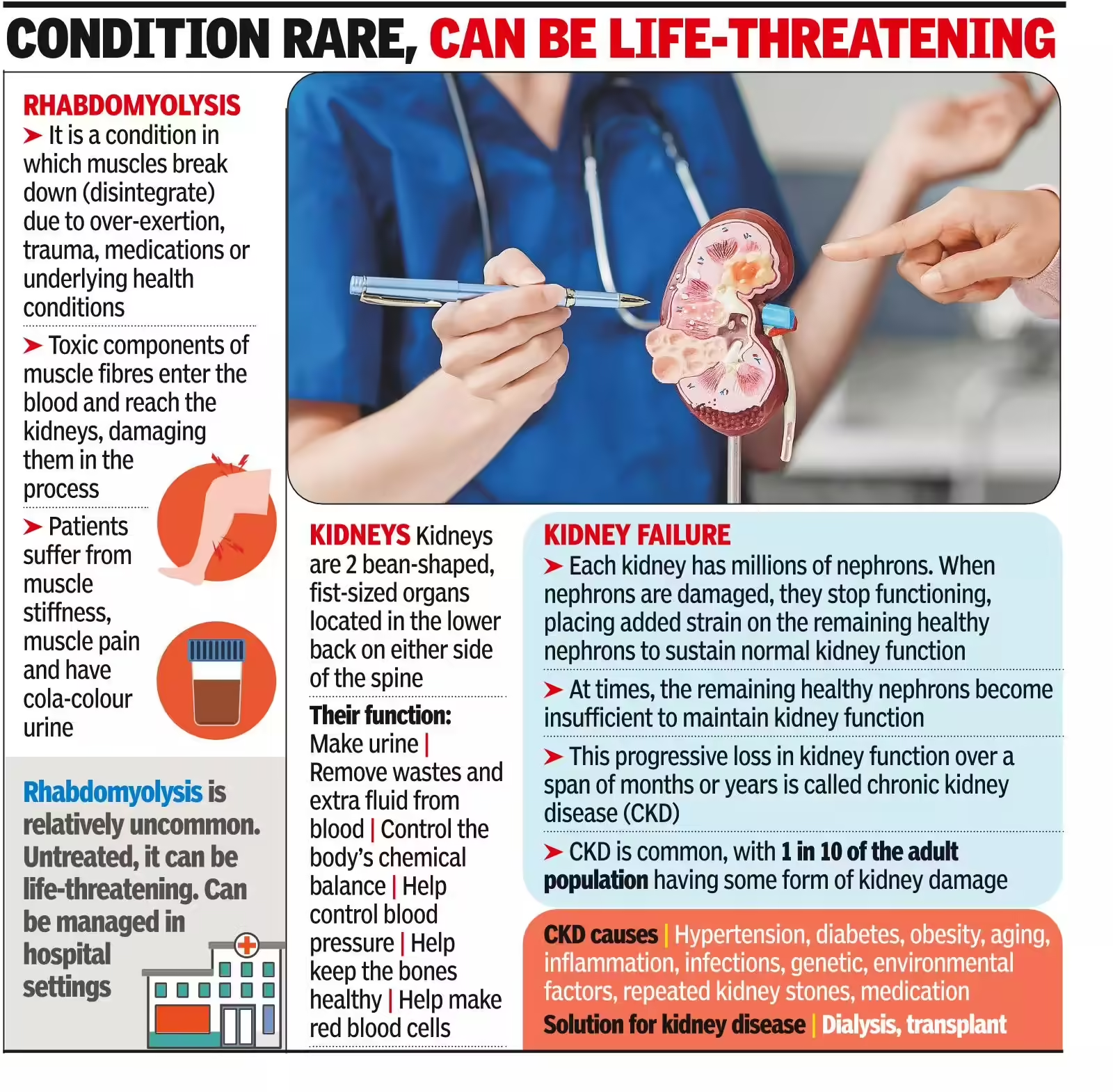
While there is widespread concern about the rising incidence of long-term chronic kidney disease across India on World Kidney Day (March 12), mainly due to the rise in diabetes and hypertension, Dr Keskar said greater awareness is needed to prevent acute (but temporary) kidney injuries such as rhabdomyolysis.To prevent these kidney problems, nephrologist Dr Bharat Shah launched a clinic at Gleneagles Hospital, Parel, to focus on the preventive aspects of kidney disease. “We need to educate people, especially those with diabetes, hypertension and obesity, on how to take care of their kidneys so they don’t suffer from chronic kidney disease,” he said.Dr Shah said that while an estimated 2.5 lakh new cases of chronic kidney disease are diagnosed every year across India, barely 5% of patients seek treatment. “Our patient load is likely to be higher,” he said.In Mumbai, there are at least 4,000 people with end-stage kidney disease who have registered for a kidney transplant, but the waiting period is four to five years.Meanwhile, Dr. Bansode’s kidney function gradually returned to normal after rhabdomyolysis. He has returned to work in the ICU of Fortis Hospital. “I still go to the gym, but now I pace myself.”