Oil prices rose to $120 a barrel before retreating to $102 on Monday as Saudi Arabia was reported to be cutting production, adding to reduced supply due to disruption in the Strait of Hormuz.Finance ministers from the G7 developed countries, who met on Monday night, postponed their plans to tap their strategic reserves to cool the global rise in prices, while pledging to closely monitor developments in the supply situation.Although Brent prices hit the highest level seen since mid-2022, government officials said there was no immediate plan to increase fuel prices in India. “We are in a good position against crude oil. “There is unlikely to be an increase in gasoline and diesel prices in the foreseeable future, even if prices remain between $110 and $120 per barrel,” a senior government official said.
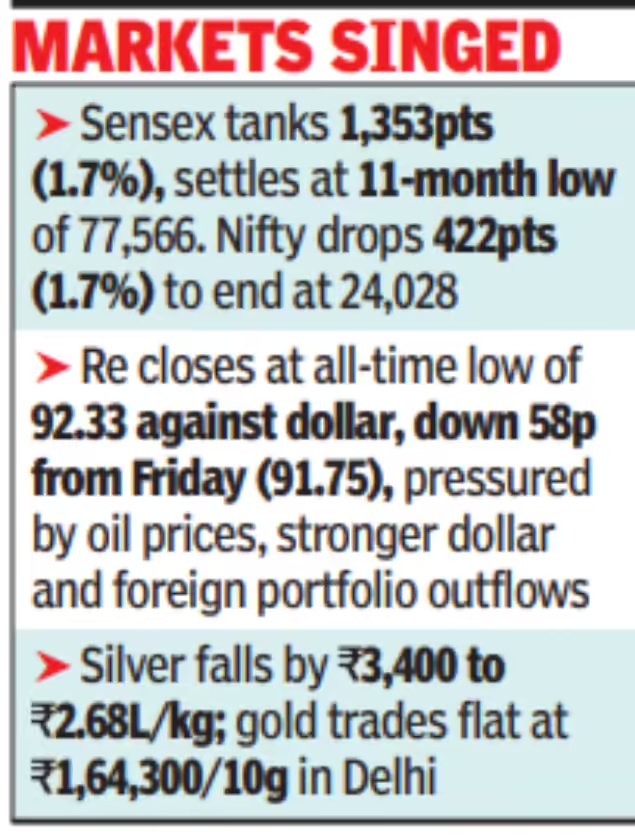
The conflict with Iran causes Brent to soar 65% since February 28
The Indian basket was on the verge of reaching $100 a barrel after reaching $99.12 on Friday, almost 40% higher than the February 27 level of $71.19. Since February 28, when the United States and Israel bombed Iran, the global benchmark Brent has risen as much as 65%.The statement came amid reports that Saudi Aramco had begun reducing production from two of its fields, joining Iraq, Kuwait, Qatar and the United Arab Emirates, as they ran out of storage due to blocked shipments.However, government officials reiterated that India has sufficient oil and gas reserves to meet domestic needs. They also attempted to dispel rumors of fuel shortages and dismissed reports of shortages anywhere in the country. Officials also maintained that there are adequate stocks of fuel for aviation turbines. “India is also a producer and exporter of ATF; there is no need to worry,” one of them said.The disruptions have led governments to initiate emergency action. For example, Japan, which imports about 95% of its oil from West Asia, has ordered a national oil reserve storage site to prepare for a possible release of crude, while China has asked refiners to stop fuel exports. South Korea has capped prices for the first time in 30 years, while Vietnam eliminated fuel import tariffs. Bangladesh has closed universities to conserve electricity and fuel.Panic in the markets led G7 finance ministers to consider releasing crude from strategic reserves, a move officials said India was not considering as it sought to secure its supply lines.India, the third largest oil importing and consuming country in the world, has 5.3 million tons of strategic underground reserves, which are at 80% of their capacity. “The crisis (which led to a rise in prices) is not our creation. Those responsible have to deal with it and create situations to alleviate (prices). Ours is an India-first policy,” a government official said.India is not a full member of the IEA and is under no obligation to follow the international body’s dictates, the officials added.