What was Helmut Kohl’s net worth?
Helmut Kohl was a German politician who had a net worth of $1.5 million. Helmut Kohl was born in Ludwigshafen, Germany, in April 1930 and died on June 16, 2017. Helmut was associated with the Christian Democratic Union political party. He received a doctorate from the University of Heidelberg and began his political career in 1960 when he served as leader of the CDU party. From 1969 to 1976, Kohl was Minister President of Rhineland-Palatinate. He served as Chancellor of Germany from 1982 to 1998, a position that included Chancellor of West Germany from 1982 to 1990 and of reunified Germany from 1990 to 1998. As Chancellor, he oversaw the end of the Cold War, and his 16-year tenure was the longest since Otto von Bismarck.
Kohl is perceived as responsible for German reunification, and he and French President François Mitterrand are seen as responsible for the establishment of the European Union. The couple received the Charlemagne Prize in 1988. Helmut also won the Prince of Asturias Award for International Cooperation in 1996 and was named Honorary Citizen of Europe in 1998. US Presidents Bill Clinton and George HW Bush described him as “the greatest European leader of the second half of the 20th century.”
Early life
Helmut Kohl was born Helmut Josef Michael Kohl on April 3, 1930 in Ludwigshafen, Germany. He was the son of Cäcilie and Hans Kohl and had two older brothers. Helmut’s father was a civil servant and veteran of the Bavarian army. His older brother died at the age of 18 while fighting in World War II. Kohl grew up in a conservative Catholic family that was loyal to the Catholic Center Party. When Helmut was 10 years old, he joined the Deutsches Jungvolk section of the Hitler Youth and, five years later, was sworn into the Hitler Youth a few days before the war ended; Membership was mandatory for children of that age. He was drafted for military service that year but did not participate in combat.
Kohl attended Ruprecht Grammar School and the Max-Planck-Gymnasium, and after graduating in 1950, he studied law in Frankfurt am Main. In 1951 he moved to the University of Heidelberg and studied political science and history. Helmut graduated from the University of Heidelberg in 1956 and then accepted a scholarship to the Alfred Weber Institute of the University of Heidelberg, where he joined the AIESEC student society. Kohl obtained a doctorate in history in 1958 and his thesis was titled “Die politische Entwicklung in der Pfalz und das Wiedererstehen der Parteien nach 1945” (“Political events in the Palatinate and the reconstruction of political parties after 1945”). Helmut then took a job as assistant director of a Ludwigshafen foundry and, in 1960, became manager of the Chemical Industrial Union.
Career
In 1959, Kohl was elected to the state legislature of Rhineland-Palatinate and, a decade later, was elected minister-president (prime minister) of the state. He had joined the Christian Democratic Union of Germany (CDU) in the mid-1940s, and became the party’s national vice-president in the late 1960s and its president in 1973. He ran for chancellor in the 1976 federal election as a CDU and Christian Social Union (CSU) candidate, but was defeated by the Social Democratic Party (SPD) candidate Helmut Schmidt, who was later forced to vote. leave office. In the vote to elect a new chancellor in March 1983, Kohl received the majority of votes. He was re-elected on January 25, 1987 and subsequently led the campaign for the reunification of West Germany and East Germany. In May 1990, Helmut’s government and the East German government signed a treaty to unify the economic and social welfare systems of the two countries. East Germany was dissolved on October 3, 1990, and its constituent states (Mecklenburg-Western Pomerania, Brandenburg, Thuringia, Saxony, and Saxony-Anhalt) joined West Germany to form a reunified Germany. On December 2, 1990, the first free and exclusively German parliamentary elections since the early 1930s were held, and Kohl and his governing coalition won a majority of 134 seats.
After absorbing the East German economy, Helmut’s government had to raise taxes and cut public spending. Voters were unhappy with these changes and in the October 1994 parliamentary elections Kohl’s majority was reduced to 10 seats. He was defeated by Gerhard Schröder in the 1998 federal election and resigned from his position as CDU leader. In 1999, Helmut became embroiled in a scandal involving illegal campaign contributions and was later fined for embezzlement. He retired from politics in 2002 and published his first memoirs, “Memories 1930-1982,” in 2004.
fake images
personal life
Helmut married Hannelore Renner on June 27, 1960. The couple met at a dance class in 1948 and Kohl proposed in 1953, but delayed the wedding until he was financially stable. They welcomed their sons Walter (born 1963) and Peter (born 1965). Hannelore was fluent in English and French and was an advisor to Helmut during his political career. Walter and Peter attended university in the United States (Harvard and MIT, respectively). Walter was a financial analyst at Morgan Stanley before co-founding a consulting firm with Helmut, and Peter was an investment banker in London. Sadly, Hannelore committed suicide in July 2001 at the age of 68 after years of suffering from photodermatitis (also known as sun poisoning).
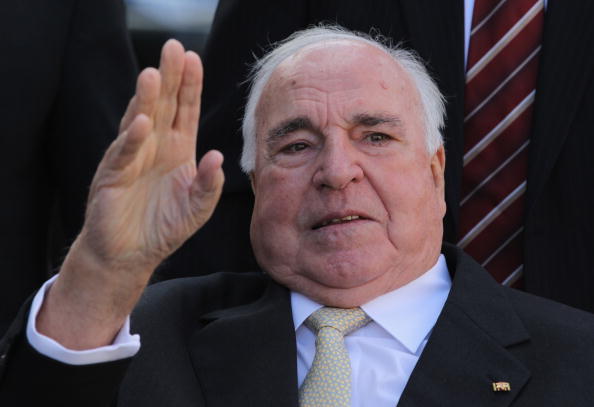
In 2008, Kohl, 78, married Maike Richter, 44, while he was in the hospital with a head injury. They remained together until Helmut’s death in June 2017, and he suffered a brain injury the entire time, was in a wheelchair and could barely speak. Peter has said that his father had no intention of marrying Maike and “then came the accident and the loss of control.” Maike refused to let Helmut’s children and grandchildren see him for the last six years of his life. In a biography Peter wrote about his mother, he talked about the only time he visited Maike’s apartment, describing it as “a kind of private Helmut Kohl museum” that “seemed like the result of an astonishing, meticulous collection for the purpose of hero worship.” Helmut underwent bladder surgery in 2010 and heart surgery in 2012. In June 2015, he underwent hip replacement surgery, followed by intestinal surgery, and was reported to be in “critical condition.”
Death
On June 16, 2017, Kohl died of natural causes at the age of 87. On July 1 he received a European state charter in Strasbourg, France. A Catholic requiem mass was celebrated in Speyer Cathedral, Germany, and Helmut was buried in the Cathedral Chapter Cemetery. None of his children or grandchildren participated in any of the ceremonies due to a dispute with Kohl’s second wife, Maike Kohl-Richter, who ignored his wishes for a ceremony in Berlin and for Helmut to be buried in the family grave next to his parents and his first wife. Chancellor Angela Merkel said of Kohl’s death: “This man who was great in every sense of the word – his achievement, his role as a statesman in Germany in its historic moment – will take some time until we can truly assess what we have lost with his passing.” Pope Francis stated: “Chancellor Kohl, a great statesman and a committed European, worked with farsightedness and devotion for the good of the people in Germany and in neighboring European countries.”
Honors
Kohl earned numerous honors during his lifetime. In 1977 he received the Order of Merit of the Italian Republic. In the 1980s, he received the Grand Cross of the Order of Christ (1984) and the Grand Cross of the Order of Prince Henry (1988) of Portugal, and he and François Mitterrand shared the Charlemagne Prize of Aachen for “distinguished service on behalf of European unification” (1988). In the 1990s, Helmut received the Europe Prize for Statesmanship (1991), the Bavarian Order of Merit (1994), the B’nai B’rith International Presidential Gold Medal (1996), the Ouissam Alaouite Order of Morocco (1996), the Eric M. Warburg Prize of Germany (1996), the Prince of Asturias Prize for International Cooperation (1996), the Vision for Europe Prize (1997), the Order of the White Eagle (1998), the Grand Cross with Special Design of the Order of Merit of the Federal Republic of Germany (1998), the Order of the Dutch Lion (1999), the Order of Leopold of Belgium (1999), the Presidential Medal of Freedom of the United States (1999), the Statesman of the Decade award from the EastWest Institute of the United States (1999) and an Order Olympic of the International Olympic Committee (1999).
Kohl later received an Order of Merit from the Academy of Moral and Political Sciences of France (2003), the Global Leadership Award from the Chicago Council on Foreign Relations of the United States (2005), the Order of the Cross of Terra Mariana from Estonia (2006), the Médaille d’or from the Jean Monnet Foundation for Europe (2007), the Prize for Understanding and Tolerance from the Jewish Museum in Germany (2007), the Atlantic Council of the United States Distinguished Leadership Award (2009), Grand Order of Queen Jelena of Croatia (2010), and Henry A. Kissinger Award from the American Academy in Berlin (2011).
All net worths are calculated using data extracted from public sources. When provided, we also incorporate private advice and feedback received from celebrities or their representatives. While we work diligently to ensure our figures are as accurate as possible, unless otherwise stated, they are estimates only. We appreciate all corrections and comments using the button below.