Although the COP process primarily involves national negotiations, its success largely depends on the empowering role of civil society organizations, he noted.
The Minister highlighted growing global challenges, including reinvigorated geopolitical fault lines, fierce competition in energy, mining, rare elements, artificial intelligence and digital sovereignty, demographic changes, waves of migration, food security challenges and financial uncertainty.
He pointed to a new distinction between “fossil blocks” and “green blocks.”
He emphasized that Western green standards sometimes undermine the space for dialogue with the development priorities of the Global South and developing countries.
relevant
Turkiye’s role as a bridge
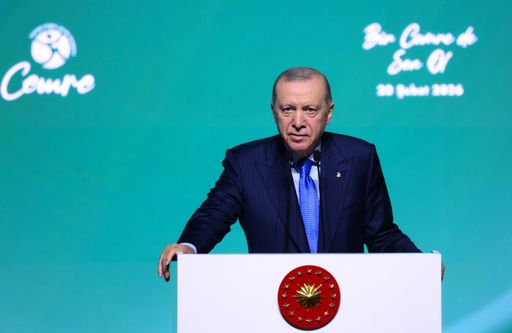
Kurum emphasized Turkiye’s bridging role in global climate efforts, saying: “Turkye will serve as a voice for countries seeking progress through climate justice, a just transition, and a humane approach to diplomacy.
“At the same time, we will push developed countries to take responsibility through proposals for a green economy, green energy, equity and loss and damage fund.”
He emphasized that fighting the climate crisis does not limit economic growth or impede development, but instead promotes inclusive prosperity, equity and sustainable development globally.
The Conference of the Parties (COP) is the highest decision-making body of the United Nations Framework Convention on Climate Change (UNFCCC) and has met annually since 1995 to evaluate progress on climate change and negotiate measures.
The 31st General Assembly (COP31) will be held this November in Turkye, centered around Antalya, a resort on the Turkish Riviera, and the summit will be held in Istanbul.
The meeting is expected to bring nearly 200 countries together in Turkye to discuss the next steps in implementing the Paris Agreement, including updated emissions reduction targets, adaptation measures, climate finance and carbon market rules.
relevant
Source Link : https://www.trtworld.com/article/4ea2f00cb13f