introduction
Standing out in today’s competitive job market takes more than just dedication and a solid work ethic. As the financial industry continues to evolve with greater complexity and higher expectations, strong financial skills have become an absolute necessity. Not only does it show that you are ready to take on greater responsibility, but it also positions you as a strategic asset to any organization. Whether you’re aiming for a long-awaited promotion or considering a major career change, strengthening your financial acumen will improve your efficiency and strengthen your ability to take advantage of new opportunities as they arise. Investing in professional development early on, such as enrolling in a reputable finance online course, offers a practical and flexible route to build both your knowledge and qualifications. With the right foundation, you can stay adaptable in a rapidly evolving field and continually prove your value to employers.
Today’s finance roles go beyond traditional number crunching and require adaptability, a strong sense of ethics, and a keen ability to translate financial insights into strategies that benefit the entire organization. Committing to lifelong learning, fostering strategic relationships, and acting with unwavering integrity not only improves performance, but also highlights long-term potential. By continuously expanding your skills and embracing new challenges, you can remain agile and competitive, differentiating yourself and positioning yourself for continued success in a highly demanding field.
Get relevant certifications
In an increasingly complex field, advanced qualifications and certifications can set finance professionals apart from their peers. Earning a designation such as a Chartered Financial Analyst (CFA), Certified Public Accountant (CPA), or Financial Risk Manager (FRM) signifies a deep commitment to your craft and an advanced level of expertise. These industry-recognized credentials demonstrate both your technical skills and commitment to excellence, and often exceed the minimum requirements for high-level roles. According to The World Financial Review, employers consistently prefer applicants with these rigorous, industry-standard qualifications. These certifications not only increase your credibility but also open opportunities for leadership positions and professional functions within the financial sector, providing a real return on your investment in continuing education. Building a portfolio of credentials sends a clear message that you are proactive, ambitious, and well-positioned to advance your career.
Develop essential soft skills
While technical expertise forms the backbone of the role, essential soft skills are what pave the way for top performers to achieve leadership and influence. The ability to communicate complex financial concepts in an accessible and meaningful way is essential to collaboration with colleagues from non-financial backgrounds. Effective communication skills not only break down silos within an organization, but also promote teamwork and shared vision across departments. Leadership and decision-making skills are equally important. Successful financial professionals earn trust and inspire their teams by demonstrating confidence, empathy, and sound judgment, especially under pressure. According to the Forbes Finance Council, soft skills are increasingly becoming a deciding factor in promotions and key job assignments, signaling to employers that your value goes far beyond numbers and that you’re ready to lead teams and projects to success.
Discover mentorship and networking opportunities
Building strategic professional connections can play an important role in planning your career progression in finance. Without a strong network, opportunities may remain out of reach, regardless of your skills or ambitions. Mentors play a pivotal role in providing guidance, sharing industry knowledge, and providing actionable feedback that can help you chart your career path and accelerate your growth. Actively participating in the professional community through industry conferences, workshops, professional forums, networking events and more will keep you in touch with the latest trends, innovative ideas and best practices. This exposure not only improves your knowledge base, but also expands your access to resources and career prospects. As highlighted by The World Financial Review, intentionally seeking out both mentorship and networking avenues is essential for career mobility, allowing you to increase your visibility to decision makers and build mutually beneficial relationships in your industry.
Committed to lifelong learning
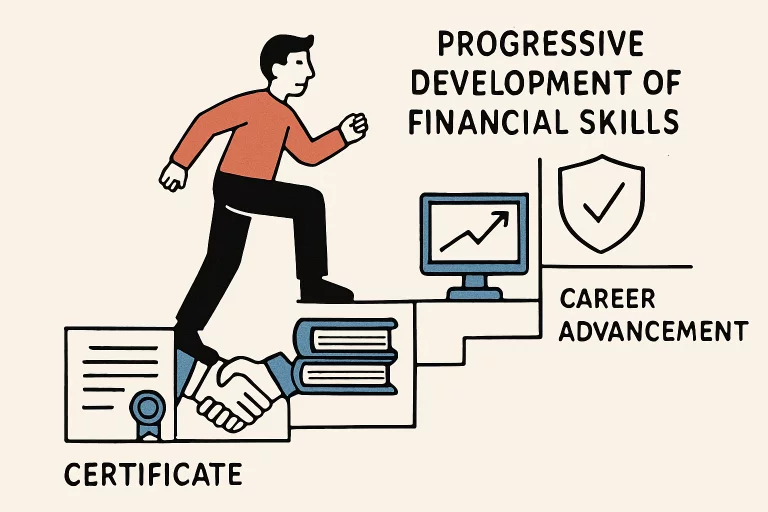
The financial industry is defined by constant change. Regulatory updates, technological disruption, and changing global economic trends are all reshaping the playing field. Staying current isn’t always ideal. This is essential to staying relevant and achieving long-term success. Regularly attending webinars, signing up for advanced workshops, and pursuing additional training will provide you with valuable insights and practical skills that will keep you at the forefront of the latest developments. Continuous learning is more than just updating your skills. This fosters a growth mindset and encourages adaptability. According to Robert Half, embracing life-long learning can foster a resilient and forward-thinking outlook that is essential for successful financial professionals. By viewing education as an ongoing journey, you can keep your skills sharp and your perspective fresh, preparing you for unexpected challenges and opportunities.
Embrace technical proficiency
Finance may be built on numbers, but technology is the engine that drives modern finance forward. Proficiency with financial platforms such as Bloomberg Terminal, QuickBooks, and Microsoft Excel is now the price of entry. Mastering financial modeling tools and analytics software can further improve efficiency and accuracy, allowing you to quickly synthesize data and generate actionable insights. The integration of automation, machine learning, and data analytics is transforming decision-making processes, providing significant advantages to those with strong technical capabilities. Understanding how to use these digital resources can help you streamline reporting, monitor financial trends, and predict risks before they become problems. As Robert Half points out, those who embrace digital transformation and continually improve their technical capabilities will be well-positioned to thrive, manage complex projects, and contribute to strategic growth initiatives.
Cultivate sincerity and accuracy
There is no substitute for honesty and accuracy in the world of finance. The consequences of minor inaccuracies or ethical mistakes can have far-reaching implications, affecting everything from company valuation to customer trust. Establishing yourself as a trustworthy and ethical professional not only puts employers and clients at ease, it also strengthens your reputation in an industry where trust is paramount. Meticulous attention to detail and adherence to strict ethical standards ensure the accuracy and reliability of our work. According to the Financial Services Review, building a reputation for honesty and accuracy goes beyond compliance and lays the foundation for meaningful, sustainable career advancement. Maintaining these values will mark you as a credible leader and protect your professional journey from pitfalls that can hinder your progress.
By committing to a comprehensive strategy that balances technical expertise, continuing education, meaningful networking, and solid ethical standards, you can set yourself apart as a truly well-rounded financial professional. Whether you’re starting your career or preparing for executive leadership, a strong financial skill set combined with personal development and continuous improvement will be your greatest asset. This holistic approach will guide you toward sustained achievement, job satisfaction, and resilience in an ever-changing financial environment.