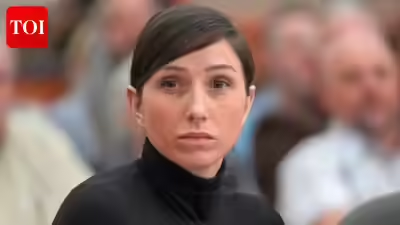
If this sounds like a Netflix true crime plot, that’s because it almost writes itself. A husband dies suddenly. A grieving wife appears on television. He writes a children’s book about loss and tells children that the dead never go away. America nods. The story seems clear, tragic and even a little inspiring.And then the ending changes.A Utah jury has convicted Kouri Richins of murdering her husband, turning what seemed like a story of grief into something much darker, almost theatrical in its deception.
What happened
Driving the news
Strip away the headlines, and the case centers on three things: money, messaging, and method.Prosecutors painted a picture of a woman under financial strain, juggling debts from real estate deals while benefiting from insurance payments and her husband’s estate. That reason gave the story its engine.Then came the messages. The texts and testimonies suggested that she wanted to break up the marriage, that she had already begun to imagine a life without him.And finally, the method. Investigators traced how the fentanyl was obtained, how the searches were conducted and how a pattern began to form. Piece by piece, the narrative hardened.The defense tried to soften it by suggesting doubts, raising the possibility of an accident. But without a solid counterstory, the prosecution’s version stood.
Why is it important
The big picture
This is where the case moves from crime to something closer to theater.For a time, the book was the story. The grieving widow, the healing words, the quiet dignity of loss. He played well. It felt believable.The verdict changes the script. Suddenly the same lines sound different. What seemed like comfort now has an advantage. What seemed like pain begins to look like a performance.There’s something almost Shakespearean about it. A character steps forward, delivers a moving speech, convinces the audience, and only later is the truth of the plot revealed. Not just tragedy, but deception wrapped in tragedy.And yet, beneath the drama, the motif is almost disappointingly ordinary. Money. Debt. Inheritance. The oldest reasons for the book, hidden behind a newer, more polished narrative.That’s what makes the case stick. Not just the crime, but the audacity of the story that surrounds it. A children’s book about loss becomes part of a murder trial. A public image built on pain collapses in the face of a verdict.The story that once comforted now disturbs.And that’s the twist no one saw coming.