Magic: The GatheringThe new Ninja Turtles card set is full of surprisingly deep cuts, from a two-headed mutant pizza that pays homage to an abandoned toy concept to a card for an obscure weather-changing device that appears in exactly one episode of the original cartoon. However, the most surprising inclusion appears on a special variant of the Leonardo card, Cutting Edge, which features the Turtles’ leader with a design only seen in the 1996 straight-to-VHS anime Lost Gem. Mutant Turtles: Legend of Superman.
The katana-wielding team leader stands tall, holding a weapon in one hand and a large purple crystal in the other. His chest is adorned with a large capital T and his mask points upward like X-Men hero Wolverine. This strange character design may surprise even TMNT fans, and to truly understand it, we have to go back three decades in time, to a point where the Turtles faced their greatest challenge yet.

By 1996, the Ninja Turtles had become staler than a week-old pizza. After a lackluster performance of the third film in 1993, plans for a sequel were abandoned. After years of their relationship being strained while running a merchandising empire, co-creators Kevin Eastman and Peter Laird barely spoke. And the 1987 cartoon series would soon end with a whimper after 10 seasons on the air.
Toy sales were also struggling, prompting Playmates Toys to return to television, much like when the company financed the first season of the original cartoon. This time, Playmates turned to the Japanese market and teamed up with Bee Media and Tsuburaya Productions for two half-hour episodes starring the Ninja Turtles, each featuring a different line of toys from 1995.
The first to receive this treatment was the “Super Mutants” line, which is where this very different looking Leonardo appeared in this Magic the card comes from. For these toys, the characters were transformed into taller, anime-like superheroes. Instead of bandanas, the Turtles wore pointy masks similar to Wolverine’s and had a “T” emblem on their chests. His sensei, Splinter, was given a much more muscular physique, while his enemies (Shredder, Bebop, and Rocksteady) became much more threatening.
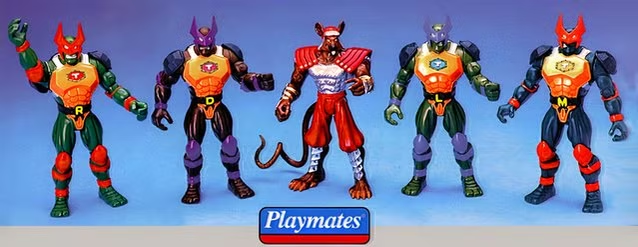
This version of the characters appeared in the first of the anime’s two episodes (aside from Splinter, who kept his classic look). As the opening credits explain, when the Turtles use their “Mutastones”, they can change from their classic forms to “Super Turtles” for three minutes at a time (this may be a mistranslation in the subtitles since the Turtles change into these forms for shape more than three minutes into the episode).
Our heroes face off against the revamped Shredder, who becomes the wildly colorful and dragon-like “Devil Shredder”, while Bebop and Rocksteady start with their classic designs, but use their stones to transform into super mutant forms. Krang maintains his 1987 cartoon appearance, but plays a vital role in the story when he awakens an evil little fairy named “Dark Mu.” Once Dark Mu emerges from his own Mutastone prison, he transforms Shredder into a Godzilla-sized “Dark Devil Shredder” whom Donatello quickly defeats by tricking Shredder into dropping a building on himself.
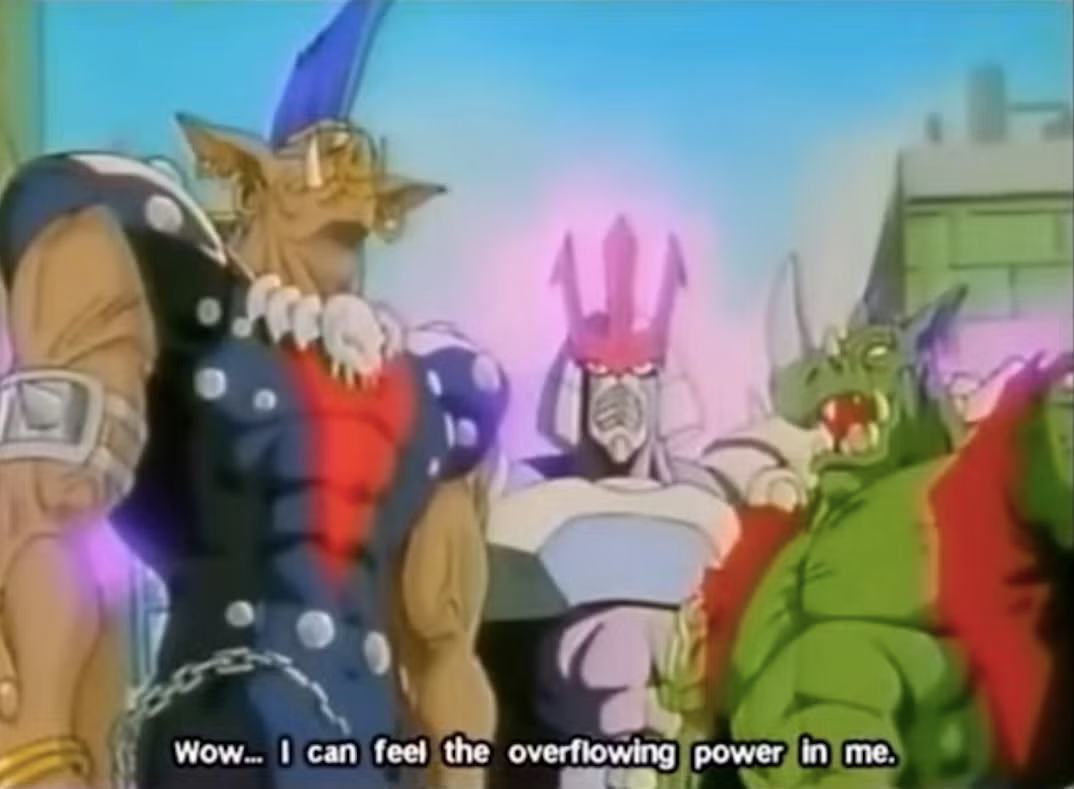
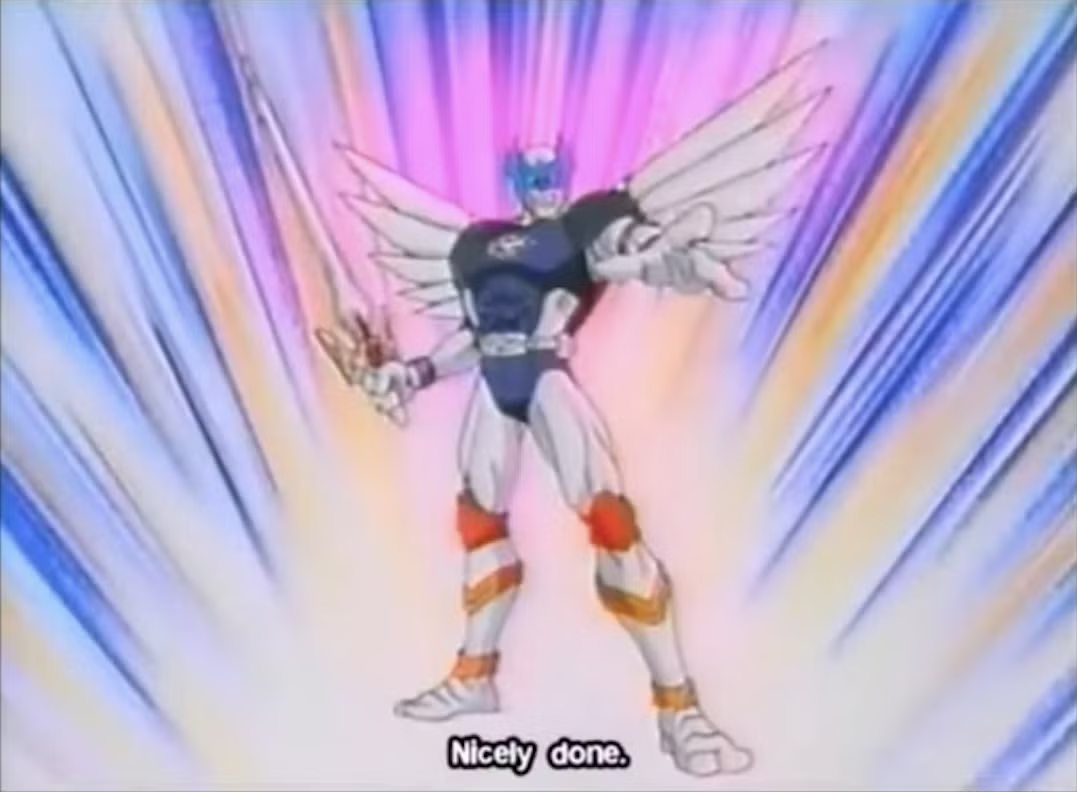
The real big bad is Dark Mu, who is heading into space to try to blow up the Earth with his evil energy powers. Using their Mutastone powers, the Turtles fuse into a winged being with white skin called “Saint Mutation”, a form they can maintain for only 100 seconds (a time limit that the cartoon does adhere to). However, they don’t defeat Dark Mu alone, as their little fairy friend, Crys Mu, sacrifices herself to kill the villain. (These fairy characters only appear here and in the related manga.)
The second of two half-hour episodes features the Turtles and their enemies venturing to Japan, where they find different Mutated stones that give them some pretty badass looking metal armor, each based on a different animal. Leonardo gets dragon armor, Raphael gets a phoenix, Donatello gets a bear, and Michelangelo seems to draw the shortest straw of the Mutastones when he gets beetle armor.
The most surprising thing about the TMNT anime episodes is that, despite all the complicated history laid out above, they are pretty good and really fun to watch. There are a lot of things in the TMNT fandom that, ironically, I love. because They’re bad, like the terrible Christmas special. We wish you a turtle Christmas. So when I watched these episodes, I expected to laugh at how bad they were. However, I was surprised at how much I actually enjoyed them.
All of the character designs are quite bold in the way they lean into the anime aesthetic to create something different from all other TMNT media. Even the animation, while limited at times, has fun with the characters and expands on them in a more cartoonish way than the 1987 series.
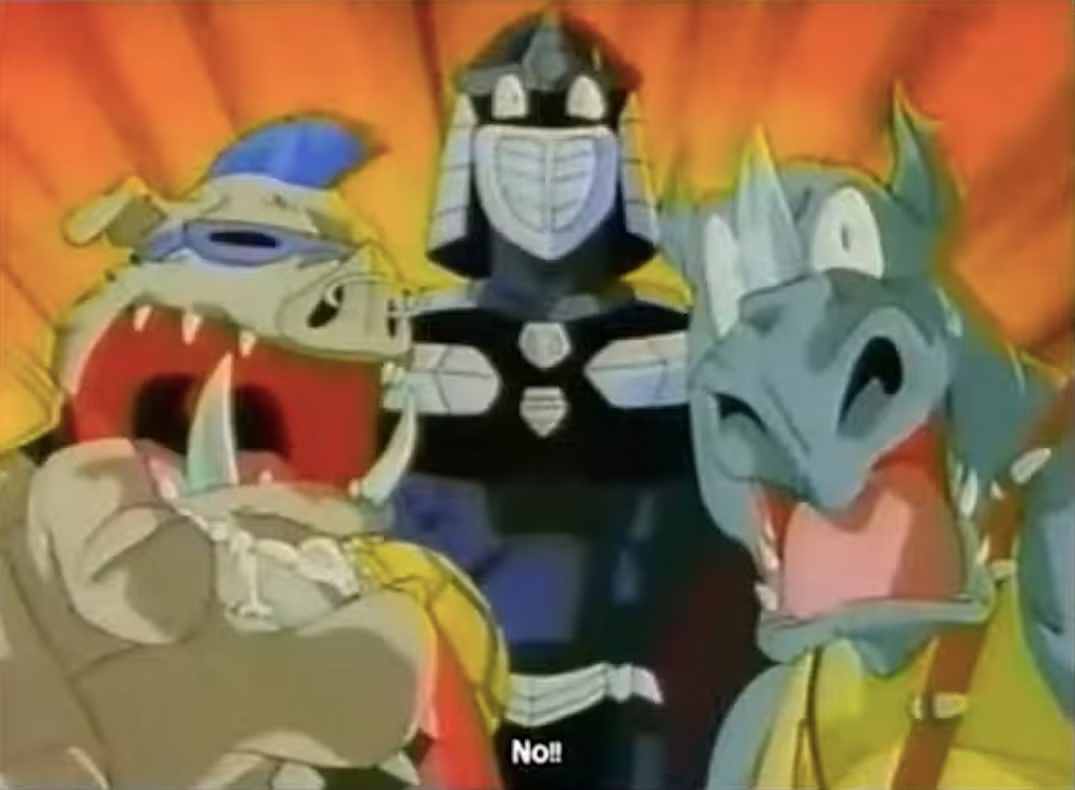
The second episode, which ventures into Japan, is also noteworthy and features Splinter reconnecting with the ninja clan he once led. (It’s not clear if this is the Foot Clan or not, but it’s still cool.) Also, if you watch the subtitled version on YouTube, there is some surprisingly adult language in the cartoon. Shredder calls Donatello a “bastard”, while the Turtles say words like “shit” and “damn”. I’m not sure if it’s an accurate translation of the original, but it still adds to the experience in a simple way.
Even with the foul language, the variety of Mutastones, and a couple of very out-of-place fairies, Mutant Turtles: Legend of Superman It’s still not the strangest thing the Teenage Mutant Ninja Turtles have ever appeared in. Just watch a few minutes of We wish you a turtle Christmaswhich features Leonardo singing with a Rastafarian accent, and you’ll see what I mean.
let’s see Magic: The Gathering make a card with it.
Soruce: polygon.com